Plumbing code is where a lot of local content goes vague or national, so here is the specific version for an Orange County home. First, a clarification: there is no separate “Orange County plumbing code.” OC cities enforce the statewide California Plumbing Code plus their own local amendments, so the right phrase is the California Plumbing Code as enforced in Anaheim and Orange County. The current edition is the 2025 California Plumbing Code, Title 24, Part 5, which took effect January 1, 2026, replacing the 2022 edition. In practical terms for you: most non-minor plumbing work needs a permit and inspection, water-heater replacements and repipes are squarely in that category, and California’s water-efficiency rules can require updating older fixtures when you do a permitted alteration. A licensed plumber pulls the permit and builds to the current code, which is part of what a license is for.
The current code edition, stated correctly
The reason to get the edition right is that code updates on a three-year cycle, so a bare year in a headline ages out fast. The current edition is the 2025 California Plumbing Code, Title 24, Part 5, effective January 1, 2026, based on the 2024 Uniform Plumbing Code with California amendments. It superseded the 2022 code.
You may have heard talk of a “2026 water-heater code change.” We have not found a new water-heater requirement in the 2025 edition that changes a typical home swap, so we are not going to claim one. What is true, and has been for years, is that water-heater work requires a permit and inspection, and that is the part that actually affects your project. When we cite a code requirement to you, it is one we can point to, not a rumor.
When you need a permit
The short answer is that most plumbing work beyond a minor repair needs a permit, and the permit protects you as much as it satisfies the city.
A permit and a final inspection are required for a water heater replacement, and that includes a like-for-like swap of the same fuel and capacity. Homeowners are often surprised by this, but a same-for-same water heater still requires the permit and the inspection. A whole-house repipe requires a plumbing permit, and the inspection chain includes a rough-in inspection before the walls are closed, pressure-test documentation, and a final inspection. Gas line work requires a permit with a gas-piping diagram and load calculations. Sewer work generally requires a permit as well.
The value of the permit is not just legality. It means an inspector confirms the work was done to code, which matters for your safety now and for your paperwork when you sell. Unpermitted plumbing has a way of resurfacing as a problem at the worst time, during a sale, so doing it permitted the first time is the cheaper path.
Water heaters: the code items that show up on inspection
If you are replacing a water heater, a few code items reliably come up at inspection, and knowing them keeps a swap from failing.
Seismic strapping is required: two straps, one around the upper third of the tank and one around the lower third, with the lower strap positioned above the thermostat or gas control. This is California Plumbing Code section 507.2, and it is the section your city’s water-heater handout will reference.
A temperature-and-pressure relief valve must discharge through a full-size pipe to near the floor, with no traps and no threaded end that could be capped. A drain pan is required where a leak would cause structural damage, with its own drain to an approved location. And on a closed system, thermal-expansion control, typically an expansion tank, is generally required, and it is a real inspection item on a swap. These are the details an unpermitted install skips and an inspector catches.
Tankless and repipe specifics
A tankless install carries its own code weight. Because a tankless unit draws far more gas on demand than a tank, it typically requires a larger or dedicated gas line from the meter, and the review wants a gas-piping schematic with pipe sizing and appliance loads. It also has to meet the plumbing, mechanical, and energy codes together. This is a big part of why a tankless conversion is more involved than a straight tank swap.
For a repipe, the sequence matters: the rough-in inspection has to happen before the walls are closed up, so the plumbing is verified while it is still visible, followed by pressure-test documentation and a final inspection. A licensed plumber schedules those so the job is not held up or opened back up.
Water efficiency: the rule that can surprise you on a remodel
California has water-efficiency requirements, and there is one thread that catches older-home owners off guard, so it is worth spelling out.
Under state law, specifically California’s SB 407, codified at Civil Code sections 1101.1 through 1101.8, single-family homes built on or before January 1, 1994 were required to replace noncompliant plumbing fixtures with water-conserving ones by January 1, 2017. On top of that, any permitted alteration to such a home on or after January 1, 2014 must bring noncompliant fixtures up to standard as a condition of final sign-off. The practical effect: if you own an older OC home and you pull a permit for a repipe or a significant plumbing alteration, you may be required to update older toilets and faucets to current low-flow standards as part of closing out the job. The current maximum flow figures are 1.28 gallons per flush for toilets, 1.8 gallons per minute for showerheads, 1.8 gallons per minute for kitchen faucets, and 1.2 gallons per minute for bathroom lavatory faucets.
This is not a reason to avoid the work. It is a reason to plan for it, and it is exactly the kind of thing we flag up front so the requirement is in your budget rather than a surprise at inspection. Handling the code for you, including this, is part of the job.
Frequently Asked Questions
Is there a separate Orange County plumbing code?
No. Orange County cities enforce the statewide California Plumbing Code plus local amendments. The current edition is the 2025 California Plumbing Code, effective January 1, 2026. Your specific city may add local requirements, which a licensed plumber accounts for.
Do I need a permit to replace my water heater in California?
Yes, including a like-for-like same-fuel replacement. A permit and a final inspection are required. The inspection checks items like seismic strapping, the relief valve discharge, and expansion control.
Can a plumbing remodel force me to update my toilets and faucets?
It can. For homes built on or before January 1, 1994, a permitted alteration on or after January 1, 2014 must bring noncompliant fixtures up to the water-conserving standard as a condition of final approval. We flag this up front so it is planned, not a surprise.
What are the current California fixture flow limits?
Toilets 1.28 gallons per flush, showerheads 1.8 gallons per minute, kitchen faucets 1.8 gallons per minute, and bathroom lavatory faucets 1.2 gallons per minute. These are the standards a permitted job builds to.
Why does a tankless install need more than a tank swap?
A tankless unit draws far more gas at once, so it often needs a larger or dedicated gas line and a gas-piping plan, and it must meet the plumbing, mechanical, and energy codes together. That is why it is a bigger permitted job than a straight tank replacement.
Let a licensed plumber handle the code for you
Planning a water heater, repipe, or tankless project and want it done to code? Call Viper Rooter & Plumbing at (657) 637-8529. We are a family-owned Anaheim plumber, licensed and insured (LIC #1022901), serving Orange County 24/7. We pull the permit, build to the current California Plumbing Code as enforced in your city, and tell you up front about any fixture-upgrade requirement so it is in the plan before we start.
Photo credits
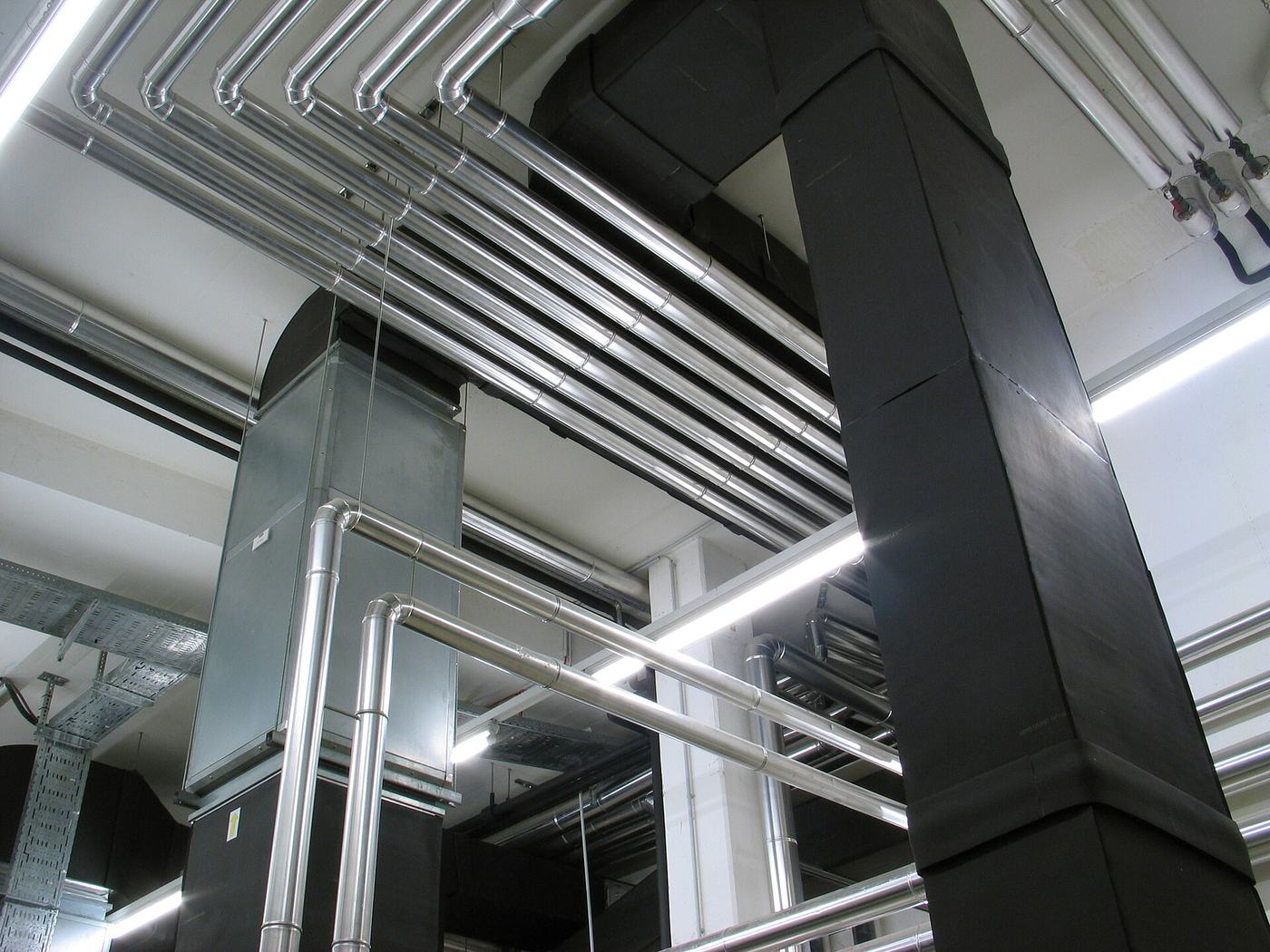
- Clean runs of installed copper and steel pipe in a mechanical room: photo by Roger McLassus Installateur Notdienst Wien, CC BY-SA 3.0, via Wikimedia Commons.
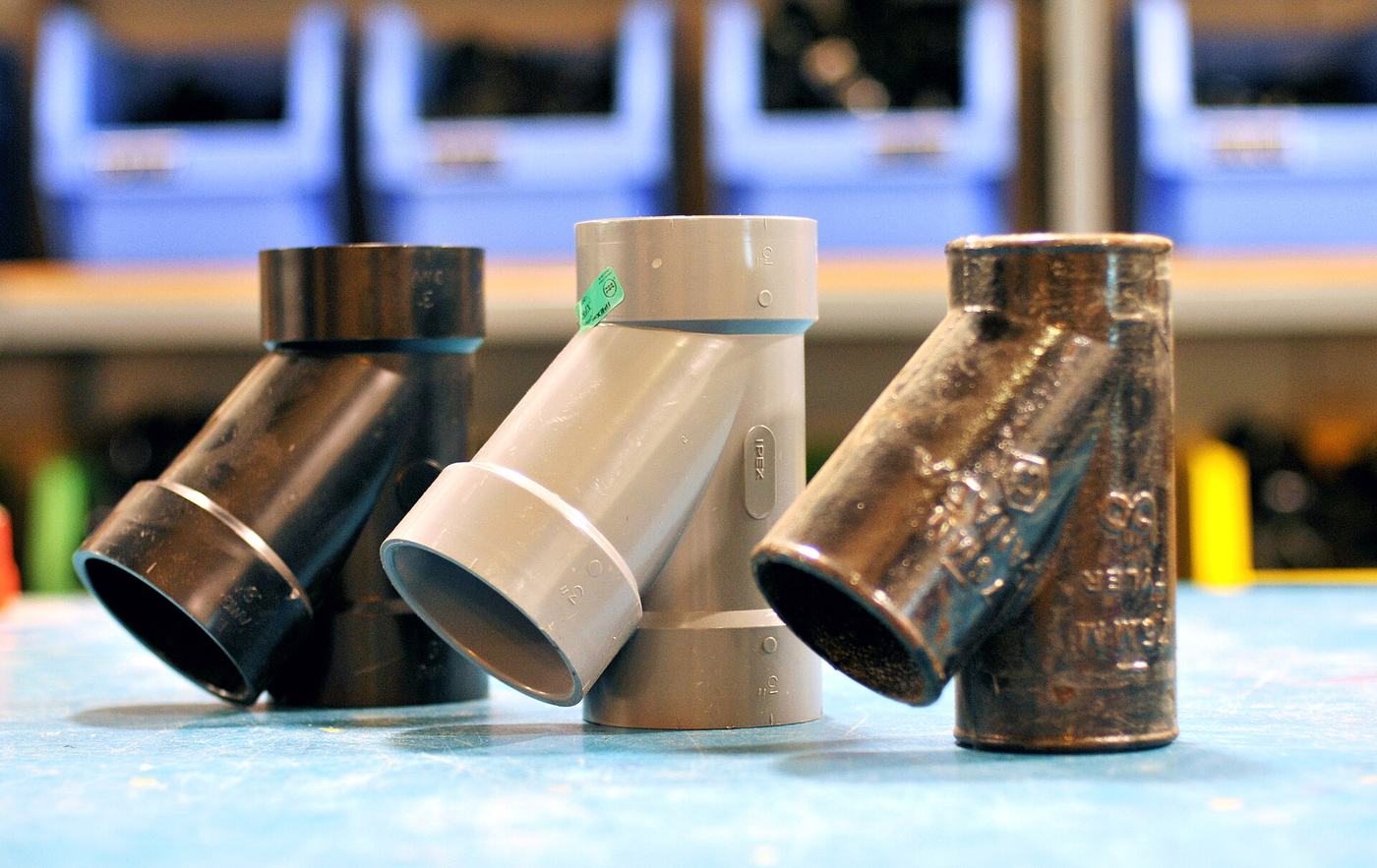
- Copper and PVC plumbing pipe fittings used in code-compliant installations: photo by University of the Fraser Valley, CC BY 2.0, via Wikimedia Commons.