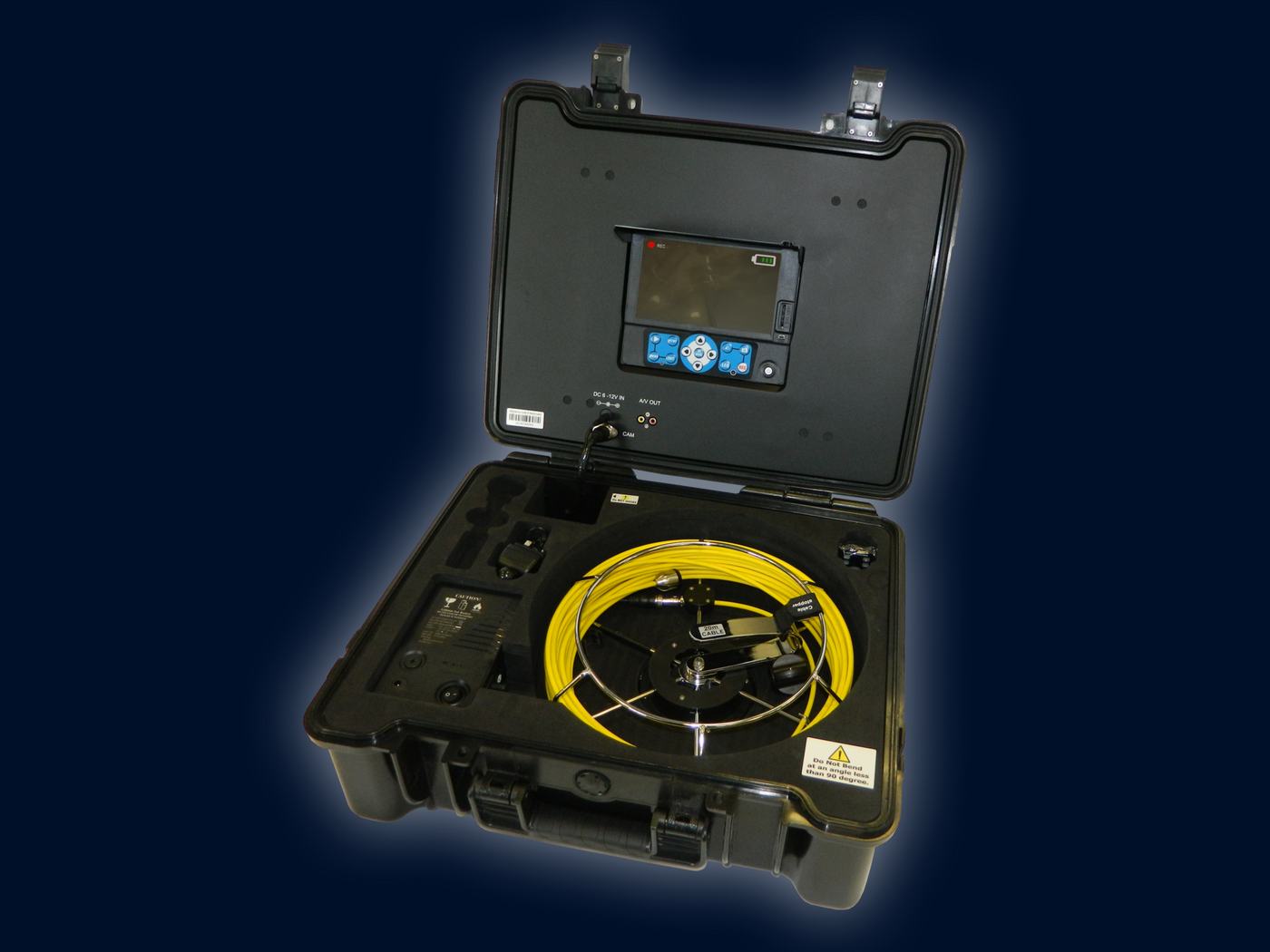
A sewer camera sends a scope down the line so you can see its interior condition on a screen. Knowing what the common findings look like lets you follow the inspection instead of just taking a verdict. The main ones are a belly (a low, sagging section where water pools), an offset (where two pipe sections have shifted out of alignment at a joint), root intrusion (fine strands or a mass entering at a joint or crack), cracks and breaks (dark lines or missing wall), and scaling (mineral or rust buildup narrowing the interior). What each one means for the repair depends on how severe it is and where it sits, which is why the inspection drives the recommendation. Below is how to read each finding, and what it may point to.
Before you interpret: watch it live
One short habit gives the footage context: ask to watch the inspection live as it runs. A continuous run that starts at your cleanout gives you a clear, unbroken view from your own access point into your line, which is easy to follow. That is the whole verification step. The rest of this guide is about reading what the camera shows.
What you are looking at, finding by finding
Here is how the common findings appear on screen and how to tell them apart.
A belly versus residual water. A belly is a section that has sagged into a low spot, usually from soil movement or settling, and on camera it shows as standing water that does not drain away as the camera passes. It matters because waste collects in that pool and causes repeat clogs. One caution: a small amount of residual water can sit in a sound line right after use and is not the same as a true belly, so a belly is read from a persistent low spot that holds water, not from a single puddle.
An offset, minor or severe. An offset is where two lengths of pipe no longer line up cleanly at the joint. On camera you see a ledge or step where the walls do not meet. A minor offset may catch some debris and often can be monitored or cleaned, while a severe offset that narrows much of the opening tends to catch waste and roots and often needs a structural repair. Severity and location are what separate the two.
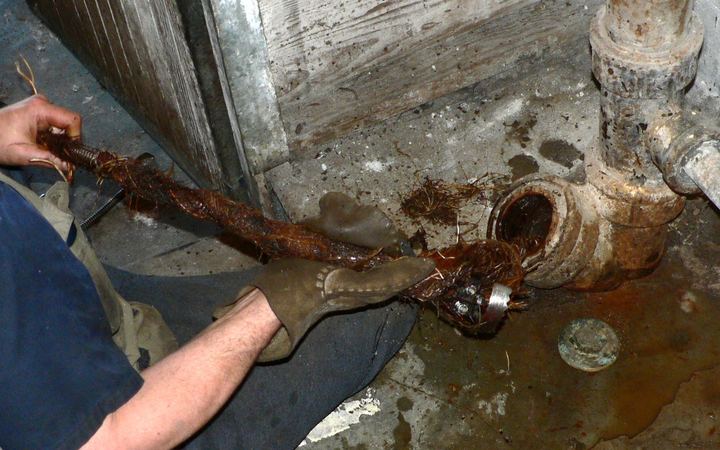
Root intrusion. Roots show as fine hairlike strands or a denser mass entering at a joint or a crack. In Anaheim’s older neighborhoods, with mature trees over aging clay and cast-iron laterals, roots are a common finding. What they mean depends on how far the joint or crack has opened, which the footage shows.
Cracks, breaks, and joint separation. Cracks appear as dark lines in the wall, breaks as missing sections, and joint separation as a visible gap where two pieces have pulled apart. These let soil and roots in and water out, and the repair depends on severity, from a spot repair to lining to replacement.
Scaling. Scaling shows as a rough, built-up interior, common in older cast iron and worsened by hard water. It narrows the pipe and catches debris. Light scaling may respond to jetting; heavy scaling in a deteriorated cast-iron line may point toward replacement.
Reading distance. Most inspections show a footage counter, so a finding can be located a set distance from the cleanout. That number is useful, because it tells you where a problem sits and helps match it to a repair without guesswork.
What each finding can mean for the repair
Reading the footage is more useful when you also know the range of what each finding may point to, without treating any mapping as automatic.
Roots at otherwise sound joints often mean jetting, and where the joints keep letting them back in, lining may follow. A single crack in continuous pipe may be a spot repair or a liner. A true belly, a severe offset, or a collapsed section is where excavation or replacement usually becomes the answer, because a liner needs a continuous host and cannot correct a pipe that has moved or caved in. Light scaling may clear with jetting; heavy scaling in a failing line may not. The consistent theme is that severity and location decide it, which is why seeing the footage yourself helps you match the repair to the finding rather than accept a single verdict.
Why this is smart before buying an older home
If you are buying an older Orange County home, a sewer camera inspection is one of the more useful small inspections to add. The sewer lateral is expensive to repair and is not covered by a standard home inspection, so a scope shows whether you would be inheriting roots, a belly, or a failing line before you own it. Watch that inspection live. What it shows is useful information for a negotiation and for planning.
Frequently Asked Questions
What is a sewer line belly?
A belly is a section of pipe that has sagged into a low spot, so water and waste pool there instead of draining. It causes repeat clogs, and because cleaning alone does not raise the pipe, the section usually needs correcting.
How do I tell a belly from normal residual water?
A belly holds water persistently at a low point that the camera returns to. A little residual water can sit in a sound line right after use. A true belly reads from a consistent low spot that pools, not a single puddle.
What is the difference between a minor and a severe offset?
A minor offset is a small step at a joint that may be monitored or cleaned. A severe offset narrows much of the opening, catches waste and roots, and usually needs a structural repair. Severity and location separate them.
How much does a sewer camera inspection cost?
It varies, and our drain cleaning special includes a free camera scope. The value is seeing the line’s condition yourself and locating any finding by its distance on the counter.
Should I get a sewer scope before buying a house?
For an older home, it is worth it. The lateral is costly to repair and not part of a standard inspection, so a scope shows what you would be buying and gives you information for a negotiation.
See your line for yourself
Want your sewer line scoped? Call Viper Rooter & Plumbing at (657) 637-8529. We are a family-owned Anaheim plumber, licensed and insured (LIC #1022901), serving Orange County 24/7. You watch the camera live from your own cleanout, and we walk you through what each finding means and what it may take to fix, with the price before we start.
Photo credits
- Sewer and drain pipe inspection camera with monitor and cable reel: photo by ReachandRescueltd, CC BY-SA 4.0, via Wikimedia Commons.