If your sewer backs up every few months and a cable keeps clearing it only for it to return, roots are a common cause, especially in older homes where the line has already been snaked more than once. Here is how it works. Roots enter a sewer line through joints and existing cracks, then thicken into a mesh that catches waste and slows flow. A cable machine restores flow by boring through the root mass, but it does not close the joint or crack the roots came through, so regrowth into the same opening brings the backup back. Hydro jetting removes more, scouring the pipe wall rather than punching a hole. What the line needs after that, cleaning on a schedule or a repair, depends on what a camera inspection shows about the pipe itself.
Why roots find your line in the first place
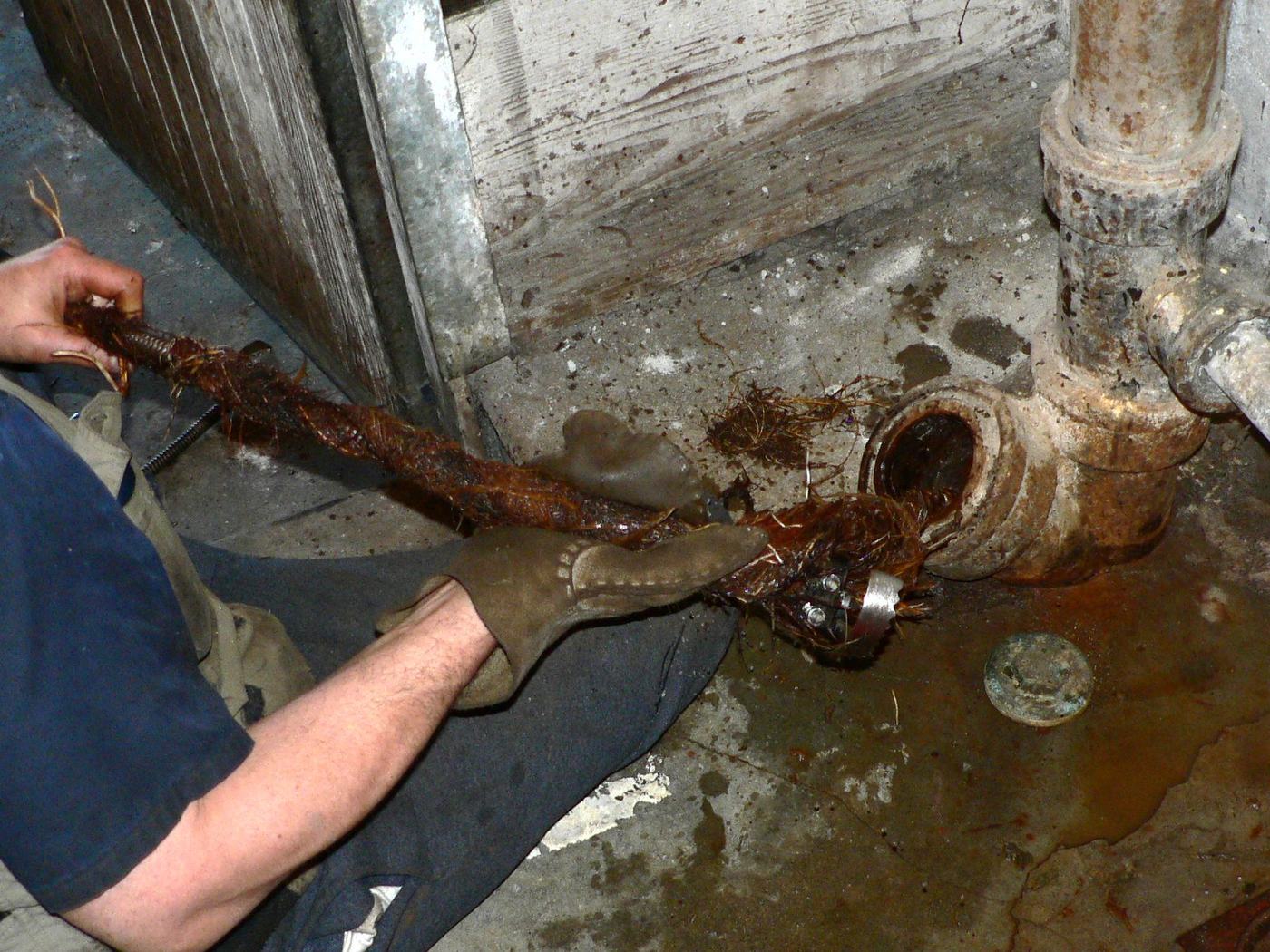
A sewer line is a steady source of water and nutrients, and tree roots are effective at finding it. They do not break through sound, sealed pipe. They enter through gaps that already exist, at pipe joints and at cracks, then grow and spread once inside.
Older Orange County neighborhoods see this often. Anaheim and the surrounding cities have mature ficus, eucalyptus, sycamore, and pepper trees whose root systems reach well past the trunk. Those roots meet aging clay-tile and cast-iron laterals whose joints have loosened with age. The expansive clay soil common in the area also swells and shrinks with the seasons, which works those joints open a little more over time. Put a water-seeking root system next to a jointed old pipe in moving soil, and root intrusion becomes one of the leading causes of main-line sewer trouble here. That is the mechanism.
Why snaking often does not hold
A cable machine, the snake, spins a cutting head down the line and clears the root mass in the pipe. The drain runs again. What snaking does not do is close the joint or crack the roots entered through, and it does not reach the root system waiting just outside the pipe. Where the intrusion comes through a defect in the pipe, roots tend to regrow into the same opening within a season or two, and the backup returns.
A repeat cycle of snaking every few months usually points to a defect in the pipe, not a one-time clog. A cable is a reasonable emergency clear when sewage is backing up tonight. It is a short-term measure when the underlying cause is a compromised joint or crack.
What actually clears roots, step by step
Removing roots and keeping them out is usually a two-step job, sometimes three.
First, hydro jetting. A high-pressure water jet scours the full inside wall of the pipe, cutting the roots and flushing debris downstream, which a cable does not do. That leaves a clean pipe rather than a bored channel.
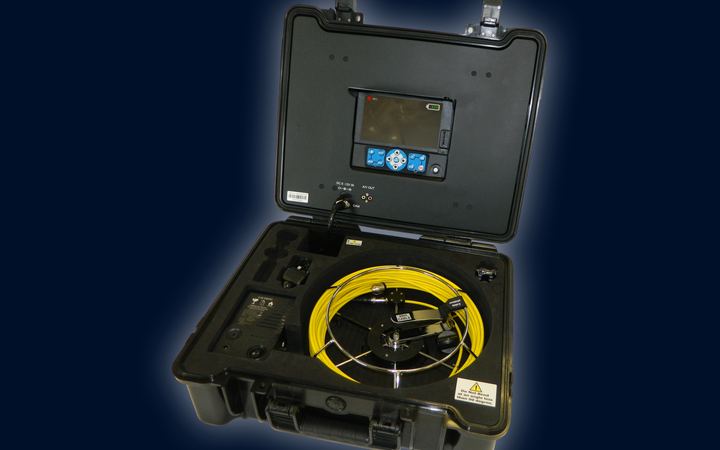
Second, the camera. Once the line is clean, a scope shows what the roots left behind: how open the joints are, whether the pipe is cracked, and whether any section is damaged beyond what cleaning addresses. You watch the screen during the inspection.
Third, if the camera shows open joints and cracks that will let roots back in, lining. A cured-in-place epoxy liner turns a jointed old pipe into a continuous one with no gaps at the joints. Where the intrusion is entering through those joints, lining is what removes the path back in.
When cleaning is enough, and when the pipe needs repair
Not every root finding calls for the same fix, and the camera is what separates them.
Minor root intrusion in a pipe that is otherwise sound often means clearing or jetting buys real time, and a maintenance interval can keep it in check. Roots entering through failed joints or cracks that keep returning point to a pipe defect as the underlying problem, and clearing alone will keep repeating. From the camera footage, the range of repair runs from periodic maintenance, to a spot repair of one bad section, to lining a jointed run, to excavation where the pipe is collapsed or badly offset. Which one applies depends on what the inspection shows, not on a default. Seeing the footage is what lets you match the work to the finding.
Letting a defect go unaddressed has a cost of its own. Every clearing on a compromised line buys a season before regrowth, and every backup is a chance for sewage to surface indoors. Where the pipe itself is the problem, repairing it is what ends the cycle.
Frequently Asked Questions
How do I know it is roots and not something else?
The pattern is a strong clue: repeat backups every few months, often in the main line so more than one fixture is affected. A camera inspection confirms it by showing the roots directly, which is why we scope before recommending a repair.
Will hydro jetting damage my pipe?
Jetting is suited to a sound pipe and is a standard way to clear roots and heavy buildup. If the camera shows a pipe already cracked or collapsed, that pipe needs repair rather than jetting, and the inspection is what tells us which.
Do root-killing chemicals from the store work?
Foaming root treatments can slow regrowth for a time, but they do not remove an established root mass or close the joints the roots use. They are a stopgap, not a repair for a line that already backs up.
How long does relining last against roots?
A properly installed cured-in-place liner is generally rated for around 50 years, and because it is continuous it removes the joints roots rely on to enter. That is what makes lining a durable answer where joints are the entry point.
Can you just replace the section with roots?
Sometimes a spot repair or dig is the right call, especially when the damage is limited to one reachable section. The camera footage shows whether a spot fix, a liner, or excavation matches your line, and the quote follows from that.
End the backup cycle
Tired of snaking the same line every few months? Call Viper Rooter & Plumbing at (657) 637-8529. We are family owned, licensed and insured (LIC #1022901), and we serve Anaheim and Orange County 24/7. We will jet the line clean, run the camera so you can see what the roots did, and tell you what it takes to keep them out, with the price before we start.
Photo credits
- Plumber pulling a mass of tree roots out of a sewer cleanout with a drain snake: photo by Walter Siegmund, CC BY 2.5, via Wikimedia Commons.